

If you want my team to just do your marketing for you, click here.


Applying for a childcare grant can be a game-changer for daycare centers looking to boost their business. At No Joke Childcare, we understand the critical role that grants play in enhancing facilities, expanding services, and supporting staff training. However, navigating the application process can be challenging, and even minor mistakes can lead to rejection.
In this blog, we’ll walk you through the most common mistakes and how to avoid them, ensuring your application stands the best chance of success.
Before we proceed, read our blog to understand what childcare expansion grant programs are.
Fast Facts About Childcare Grants
Secure Your Childcare Grant: Steer Clear of These Mistakes

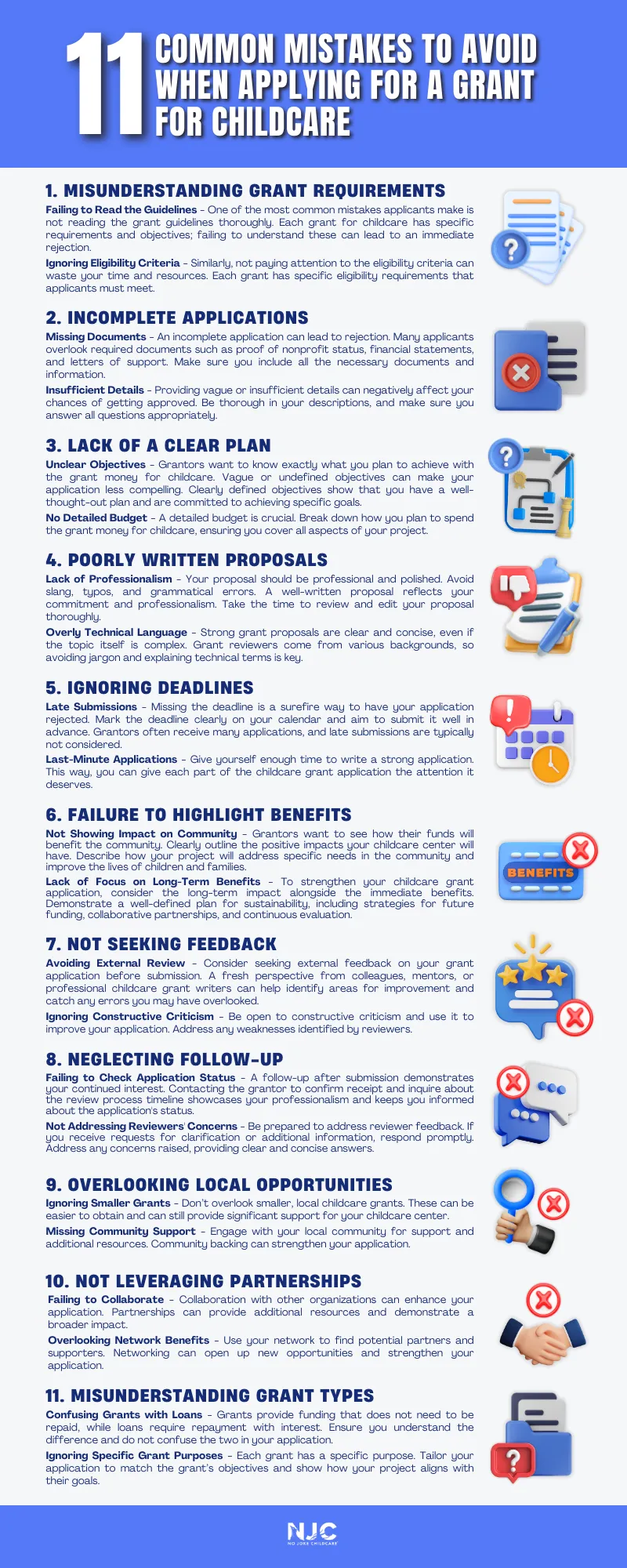
1. Misunderstanding Grant Requirements
Failing to Read the Guidelines
One of the most common mistakes applicants make is not reading the grant guidelines thoroughly. Each grant for childcare has specific requirements and objectives; failing to understand these can lead to an immediate rejection. Guidelines often include essential information about eligibility criteria, required documents, application processes, and deadlines.
If applicants do not pay attention to these details, they risk submitting incomplete or ineligible applications. Thoroughly reading and understanding the guidelines ensures you meet all the necessary criteria and align your proposal with the grantor’s objectives.
Ignoring Eligibility Criteria
Similarly, not paying attention to the eligibility criteria can waste your time and resources. Each grant has specific eligibility requirements that applicants must meet. These may include geographic location, type of organization, purpose of the grant, and specific demographic targets.
Ensure that your childcare center meets all the requirements before you start the application process. Applying for grants for which you are not eligible can damage your credibility with grantors.
2. Incomplete Applications
Missing Documents
An incomplete application can lead to rejection. Many applicants overlook required documents such as proof of nonprofit status, financial statements, and letters of support. Make sure you include all the necessary documents and information.
Double-check the checklist provided by the grantor. Missing documents can make your application appear careless and unprofessional. By including all the required documents, you demonstrate your commitment to the project.
Insufficient Details
Providing vague or insufficient details can negatively affect your chances of getting approved. Grant applications require detailed information about your project, including objectives, methods, timelines, and expected outcomes. Be thorough in your descriptions, and make sure you answer all questions appropriately.
Insufficient details can make it difficult for grant reviewers to understand your project and its potential impact. Providing comprehensive information helps reviewers see the full picture and understand the value of your proposal.
3. Lack of a Clear Plan
Unclear Objectives
Grantors want to know exactly what you plan to achieve with the grant money for childcare. Vague or undefined objectives can make your application less compelling. Clearly defined objectives show that you have a well-thought-out plan and are committed to achieving specific goals.
Outline your objectives clearly and ensure they align with the grantor’s priorities. This will help you create a compelling case as to why your project deserves funding.
No Detailed Budget
A detailed budget is crucial. Break down how you plan to spend the grant money for childcare, ensuring you cover all aspects of your project. A detailed budget demonstrates that you have carefully considered all the costs associated with your project and have a realistic plan for using the funds.
Include costs for personnel, equipment, supplies, and any other expenses relevant to your project. These details help grantors understand how their funds will be used and give them confidence in your ability to manage the grant.
4. Poorly Written Proposals

Lack of Professionalism
Your proposal should be professional and polished. Avoid slang, typos, and grammatical errors. A well-written proposal reflects your commitment and professionalism. Take the time to review and edit your proposal thoroughly.
Consider having a colleague or professional editor review it as well. A solid proposal should show that you take the childcare grant application seriously and are committed to your application.
Overly Technical Language
Strong grant proposals are clear and concise, even if the topic itself is complex. Grant reviewers come from various backgrounds, so avoiding jargon and explaining technical terms is key. Imagine explaining your project to a friend unfamiliar with the field. This approach ensures everyone on the review panel can grasp your ideas and appreciate the potential impact of your work.
5. Ignoring Deadlines

Late Submissions
Missing the deadline is a surefire way to have your application rejected. Mark the deadline clearly on your calendar and aim to submit it well in advance. Grantors often receive many applications, and late submissions are typically not considered.
Submitting your application on time shows that you respect the grantor’s timeline. Plan ahead and allow plenty of time to complete and review your application before the deadline.
Last-Minute Applications
Give yourself enough time to write a strong application. This way, you can give each part of the childcare grant application the attention it deserves. Take your time collecting all the required documents and make sure everything is written the way it should. A well-organized and complete application is sure to catch the reviewer’s eye.
6. Failure to Highlight Benefits
Not Showing Impact on Community
Grantors want to see how their funds will benefit the community. Clearly outline the positive impacts your childcare center will have. Describe how your project will address specific needs in the community and improve the lives of children and families.
Provide concrete examples of your project’s benefits, such as increased access to quality childcare, improved educational outcomes, and support for working parents. Demonstrating the positive impact of your project helps grantors understand its value and relevance.
Lack of Focus on Long-Term Benefits
To strengthen your childcare grant application, consider the long-term impact alongside the immediate benefits. Demonstrate a well-defined plan for sustainability, including strategies for future funding, collaborative partnerships, and continuous evaluation.
Highlight how your project will create a positive impact on the childcare community. This approach underscores your commitment to long-term success and strategic planning, qualities highly valued by grantors.
7. Not Seeking Feedback
Avoiding External Review
Consider seeking external feedback on your grant application before submission. A fresh perspective from colleagues, mentors, or professional childcare grant writers can help identify areas for improvement and catch any errors you may have overlooked. Their valuable insights can strengthen your application and boost its success rate.
Ignoring Constructive Criticism
Be open to constructive criticism and use it to improve your application. Address any weaknesses identified by reviewers. Constructive criticism can provide valuable insights into how to make your application more compelling and effective.
8. Neglecting Follow-Up
Failing to Check Application Status
A follow-up after submission demonstrates your continued interest. Contacting the grantor to confirm receipt and inquire about the review process timeline showcases your professionalism and keeps you informed about the application’s status.
Not Addressing Reviewers’ Concerns
Be prepared to address reviewer feedback. If you receive requests for clarification or additional information, respond promptly. Address any concerns raised, providing clear and concise answers. Demonstrating responsiveness and attentiveness to reviewer feedback can significantly strengthen your application.
9. Overlooking Local Opportunities
Ignoring Smaller Grants
Don’t overlook smaller, local childcare grants. These can be easier to obtain and can still provide significant support for your childcare center. Smaller grants may also have less competition and more flexible requirements, making them a valuable resource for your organization.
Research local foundations, community organizations, and government agencies that offer grants for childcare. Applying for multiple smaller grants can help diversify your funding sources and increase your overall financial support.
Missing Community Support
Engage with your local community for support and additional resources. Community backing can strengthen your application. Building relationships with local stakeholders, such as parents, community leaders, and other organizations, can provide valuable support and resources.
Community support can also demonstrate to grantors that your project is well-regarded and has a broad base of support. Include letters of support, endorsements, and testimonials from parents as well as community members in your application.
10. Not Leveraging Partnerships

Failing to Collaborate
Collaboration with other organizations can enhance your application. Partnerships can provide additional resources and demonstrate a broader impact. Working with other organizations can help you access new expertise, resources, and networks.
Collaborations can also show that your project has wide-reaching benefits and is supported by multiple stakeholders. Identify potential partners and develop mutually beneficial relationships that can strengthen your application.
Overlooking Network Benefits
Use your network to find potential partners and supporters. Networking can open up new opportunities and strengthen your application. Attend industry events, join professional associations, and engage with online communities to expand your network.
Building a strong network can help you identify new funding opportunities, gain valuable insights, and connect with potential collaborators. Leveraging your network can enhance your application and increase your chances of success.
11. Misunderstanding Grant Types
Confusing Grants with Loans
Grants provide funding that does not need to be repaid, while loans require repayment with interest. Ensure you understand the difference and do not confuse the two in your application. Clearly distinguish between grants and loans in your budget and financial planning. Understanding the difference can help you accurately present your financial needs and avoid misunderstandings.
Ignoring Specific Grant Purposes
Each grant has a specific purpose. Tailor your application to match the grant’s objectives and show how your project aligns with their goals. Research the grantor’s mission and priorities to ensure your project fits well.
Clearly explain how your project addresses the grantor’s goals and objectives. Tailoring your application to the specific grant purpose can make your proposal more compelling and increase your chances of success.
Conclusion
Applying for a childcare grant can be a complex process, but avoiding these common mistakes can significantly improve your chances of success. By understanding the requirements, submitting a complete application, and demonstrating clear benefits, you can make a strong case as to why your childcare center deserves funding. With careful planning and attention to detail, you can secure the funding needed to support and grow your childcare center.
Care to learn how we can help you with your childcare marketing endeavors? Schedule your free strategy call today and take your childcare business to new heights!
Applying for a childcare grant can be a game-changer for daycare centers looking to boost their business. At No Joke Childcare, we understand the critical role that grants play in enhancing facilities, expanding services, and supporting staff training. However, navigating the application process can be challenging, and even minor mistakes can lead to rejection.
In this blog, we’ll walk you through the most common mistakes and how to avoid them, ensuring your application stands the best chance of success.
Before we proceed, read our blog to understand what childcare expansion grant programs are.
Fast Facts About Childcare Grants
Secure Your Childcare Grant: Steer Clear of These Mistakes
1. Misunderstanding Grant Requirements
Failing to Read the Guidelines
One of the most common mistakes applicants make is not reading the grant guidelines thoroughly. Each grant for childcare has specific requirements and objectives; failing to understand these can lead to an immediate rejection. Guidelines often include essential information about eligibility criteria, required documents, application processes, and deadlines.
If applicants do not pay attention to these details, they risk submitting incomplete or ineligible applications. Thoroughly reading and understanding the guidelines ensures you meet all the necessary criteria and align your proposal with the grantor’s objectives.
Ignoring Eligibility Criteria
Similarly, not paying attention to the eligibility criteria can waste your time and resources. Each grant has specific eligibility requirements that applicants must meet. These may include geographic location, type of organization, purpose of the grant, and specific demographic targets.
Ensure that your childcare center meets all the requirements before you start the application process. Applying for grants for which you are not eligible can damage your credibility with grantors.
2. Incomplete Applications
Missing Documents
An incomplete application can lead to rejection. Many applicants overlook required documents such as proof of nonprofit status, financial statements, and letters of support. Make sure you include all the necessary documents and information.
Double-check the checklist provided by the grantor. Missing documents can make your application appear careless and unprofessional. By including all the required documents, you demonstrate your commitment to the project.
Insufficient Details
Providing vague or insufficient details can negatively affect your chances of getting approved. Grant applications require detailed information about your project, including objectives, methods, timelines, and expected outcomes. Be thorough in your descriptions, and make sure you answer all questions appropriately.
Insufficient details can make it difficult for grant reviewers to understand your project and its potential impact. Providing comprehensive information helps reviewers see the full picture and understand the value of your proposal.
3. Lack of a Clear Plan
Unclear Objectives
Grantors want to know exactly what you plan to achieve with the grant money for childcare. Vague or undefined objectives can make your application less compelling. Clearly defined objectives show that you have a well-thought-out plan and are committed to achieving specific goals.
Outline your objectives clearly and ensure they align with the grantor’s priorities. This will help you create a compelling case as to why your project deserves funding.
No Detailed Budget
A detailed budget is crucial. Break down how you plan to spend the grant money for childcare, ensuring you cover all aspects of your project. A detailed budget demonstrates that you have carefully considered all the costs associated with your project and have a realistic plan for using the funds.
Include costs for personnel, equipment, supplies, and any other expenses relevant to your project. These details help grantors understand how their funds will be used and give them confidence in your ability to manage the grant.
4. Poorly Written Proposals
Lack of Professionalism
Your proposal should be professional and polished. Avoid slang, typos, and grammatical errors. A well-written proposal reflects your commitment and professionalism. Take the time to review and edit your proposal thoroughly.
Consider having a colleague or professional editor review it as well. A solid proposal should show that you take the childcare grant application seriously and are committed to your application.
Overly Technical Language
Strong grant proposals are clear and concise, even if the topic itself is complex. Grant reviewers come from various backgrounds, so avoiding jargon and explaining technical terms is key. Imagine explaining your project to a friend unfamiliar with the field. This approach ensures everyone on the review panel can grasp your ideas and appreciate the potential impact of your work.
5. Ignoring Deadlines
Late Submissions
Missing the deadline is a surefire way to have your application rejected. Mark the deadline clearly on your calendar and aim to submit it well in advance. Grantors often receive many applications, and late submissions are typically not considered.
Submitting your application on time shows that you respect the grantor’s timeline. Plan ahead and allow plenty of time to complete and review your application before the deadline.
Last-Minute Applications
Give yourself enough time to write a strong application. This way, you can give each part of the childcare grant application the attention it deserves. Take your time collecting all the required documents and make sure everything is written the way it should. A well-organized and complete application is sure to catch the reviewer’s eye.
6. Failure to Highlight Benefits
Not Showing Impact on Community
Grantors want to see how their funds will benefit the community. Clearly outline the positive impacts your childcare center will have. Describe how your project will address specific needs in the community and improve the lives of children and families.
Provide concrete examples of your project’s benefits, such as increased access to quality childcare, improved educational outcomes, and support for working parents. Demonstrating the positive impact of your project helps grantors understand its value and relevance.
Lack of Focus on Long-Term Benefits
To strengthen your childcare grant application, consider the long-term impact alongside the immediate benefits. Demonstrate a well-defined plan for sustainability, including strategies for future funding, collaborative partnerships, and continuous evaluation.
Highlight how your project will create a positive impact on the childcare community. This approach underscores your commitment to long-term success and strategic planning, qualities highly valued by grantors.
7. Not Seeking Feedback
Avoiding External Review
Consider seeking external feedback on your grant application before submission. A fresh perspective from colleagues, mentors, or professional childcare grant writers can help identify areas for improvement and catch any errors you may have overlooked. Their valuable insights can strengthen your application and boost its success rate.
Ignoring Constructive Criticism
Be open to constructive criticism and use it to improve your application. Address any weaknesses identified by reviewers. Constructive criticism can provide valuable insights into how to make your application more compelling and effective.
8. Neglecting Follow-Up
Failing to Check Application Status
A follow-up after submission demonstrates your continued interest. Contacting the grantor to confirm receipt and inquire about the review process timeline showcases your professionalism and keeps you informed about the application’s status.
Not Addressing Reviewers’ Concerns
Be prepared to address reviewer feedback. If you receive requests for clarification or additional information, respond promptly. Address any concerns raised, providing clear and concise answers. Demonstrating responsiveness and attentiveness to reviewer feedback can significantly strengthen your application.
9. Overlooking Local Opportunities
Ignoring Smaller Grants
Don’t overlook smaller, local childcare grants. These can be easier to obtain and can still provide significant support for your childcare center. Smaller grants may also have less competition and more flexible requirements, making them a valuable resource for your organization.
Research local foundations, community organizations, and government agencies that offer grants for childcare. Applying for multiple smaller grants can help diversify your funding sources and increase your overall financial support.
Missing Community Support
Engage with your local community for support and additional resources. Community backing can strengthen your application. Building relationships with local stakeholders, such as parents, community leaders, and other organizations, can provide valuable support and resources.
Community support can also demonstrate to grantors that your project is well-regarded and has a broad base of support. Include letters of support, endorsements, and testimonials from parents as well as community members in your application.
10. Not Leveraging Partnerships
Failing to Collaborate
Collaboration with other organizations can enhance your application. Partnerships can provide additional resources and demonstrate a broader impact. Working with other organizations can help you access new expertise, resources, and networks.
Collaborations can also show that your project has wide-reaching benefits and is supported by multiple stakeholders. Identify potential partners and develop mutually beneficial relationships that can strengthen your application.
Overlooking Network Benefits
Use your network to find potential partners and supporters. Networking can open up new opportunities and strengthen your application. Attend industry events, join professional associations, and engage with online communities to expand your network.
Building a strong network can help you identify new funding opportunities, gain valuable insights, and connect with potential collaborators. Leveraging your network can enhance your application and increase your chances of success.
11. Misunderstanding Grant Types
Confusing Grants with Loans
Grants provide funding that does not need to be repaid, while loans require repayment with interest. Ensure you understand the difference and do not confuse the two in your application. Clearly distinguish between grants and loans in your budget and financial planning. Understanding the difference can help you accurately present your financial needs and avoid misunderstandings.
Ignoring Specific Grant Purposes
Each grant has a specific purpose. Tailor your application to match the grant’s objectives and show how your project aligns with their goals. Research the grantor’s mission and priorities to ensure your project fits well.
Clearly explain how your project addresses the grantor’s goals and objectives. Tailoring your application to the specific grant purpose can make your proposal more compelling and increase your chances of success.
Conclusion
Applying for a childcare grant can be a complex process, but avoiding these common mistakes can significantly improve your chances of success. By understanding the requirements, submitting a complete application, and demonstrating clear benefits, you can make a strong case as to why your childcare center deserves funding. With careful planning and attention to detail, you can secure the funding needed to support and grow your childcare center.
Care to learn how we can help you with your childcare marketing endeavors? Schedule your free strategy call today and take your childcare business to new heights!


